Day 371
Visibility for AI
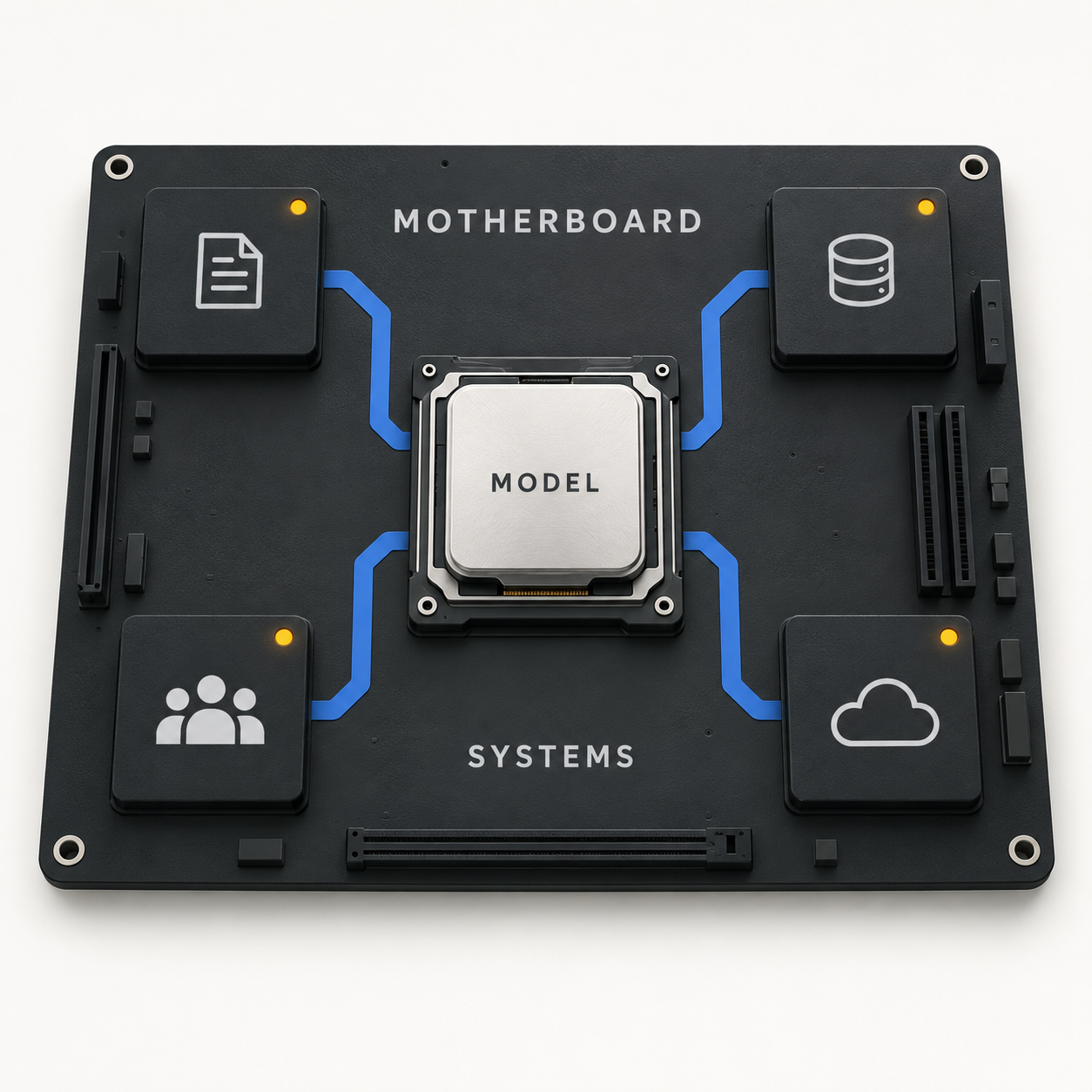
This has been my main task over the last few days. Let me explain it in a little more detail.
The value of artificial intelligence grows exponentially depending on how much data about your project you give it and how you present that data. The amount of data by itself does not guarantee quality.
For a large and complex task, I consider it a good result when a well-packaged set of data fits into one context window and uses no more than 20% of it. In that case, you can get the most value from the strongest frontier models, such as Astra or Fable.
I will use my project as an example. The better you collect data from different sources, structure it, and give it to the model in one context, the better the result becomes. Coverage also matters: the model needs to see the strong and weak sides of the work, successful decisions, and problem areas.
I am already connecting a strategic system that works on a similar principle. The central top AI model acts as the main processor, while the strategic system becomes the motherboard that sees the whole project and connects its parts.
When I connected Astra to the strategic system and ran a broad audit of the project, I found that many contradictions had accumulated inside it. One module said one thing while another said something different. Areas of responsibility overlapped, and in some places it was unclear who was responsible for what.
The audit also revealed large dark areas: parts of the project existed, but nobody supervised them and nobody was responsible for maintaining that code.
After that, I began separating the project into clear systems and areas of responsibility. Every part needs answers to several questions. Who is responsible for this code? Who is responsible for its output? Who accepts the result? Who maintains this part of the project over time?
I am now gradually removing these dark areas.
You can use a system-understanding scale from 0 to 100. Zero is an ordinary ChatGPT session in a browser that knows nothing about your system and can only guess from one message. One hundred means that the model understands the system's details, strengths, weaknesses, relationships, and contradictions.
My task is to raise the project's visibility for AI as high as possible. This will allow me to receive more relevant, high-level decisions. After that, I will return to improving the real functions of the project. For now, I am organizing it.