Day 400
400 days of Crash Brief
400 days of building Crash Brief: what stronger AI changed, what it did not, and why forecasting, outcomes and options economics need to be considered together.
Read post →
Public project history
Founder notes, analytical observations, mistakes and the real development history of Crash Brief.
66 entries
Day 400
400 days of building Crash Brief: what stronger AI changed, what it did not, and why forecasting, outcomes and options economics need to be considered together.
Read post →Day 397
My approach to introducing AI into a business starts with interviewing the founder and employees, then connecting their accounts of how the work actually happens.
Read post →
Day 396
I am preparing a 90-day autonomous R&D experiment alongside my verified forecasts, and the first week has shown how precisely goals, boundaries and daily improvement cycles need to be defined.
Read post →
Day 392
The founder describes why learning to direct AI and manage teams of AI agents is a useful skill across work and personal tasks.
Read post →
Day 391
An autonomous process multiplied itself and filled the server RAM. A second device helped diagnose the failure, and the founder describes the monitoring and recovery setup he is working on.
Read post →
Day 387
A rising price, futures buying and ETF inflows describe different kinds of demand. Today I explain why our risk assessment keeps those differences visible.
Read post →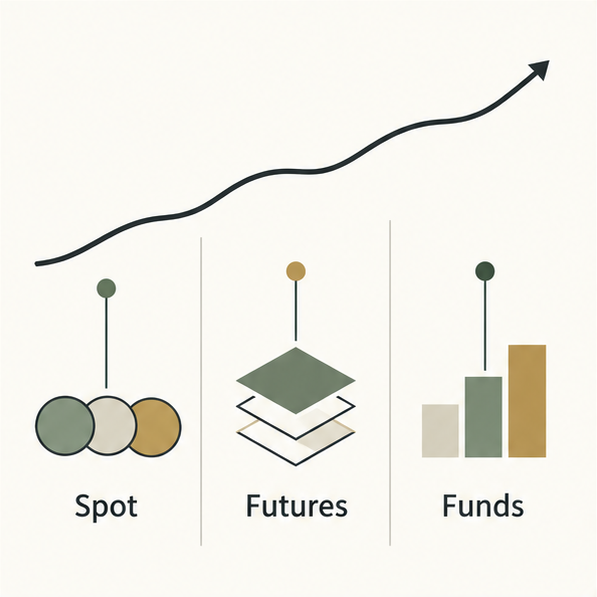
Day 386
I am building a record of permanent and temporary decisions for AI agents, while keeping the key decisions and their responsibility with people.
Read post →
Day 385
A short note on simplifying work when coordinating the available options takes more effort than the value they bring.
Read post →Day 384
I compare a year of daily market-risk judgments with later outcomes and describe what happened when my own adjustments stopped adding value.
Read post →Day 383
I explain two problems that keep recurring as I work with AI agents: visual work that misses the agreed page and well-scoped tasks that stall without a plan review.
Read post →
Day 382
I want clients to understand what Crash Brief measures and to check past estimates, while the value of the next options-related work remains to be tested.
Read post →
Day 380
Four views of future volatility and a fifth view of option cost are the next step in my search for an adaptive forecast.
Read post →
Day 379
AI agents can open more work than one founder can responsibly finish. Day 379 is about recognizing that human limit and choosing fewer active tasks with clearer endings.
Read post →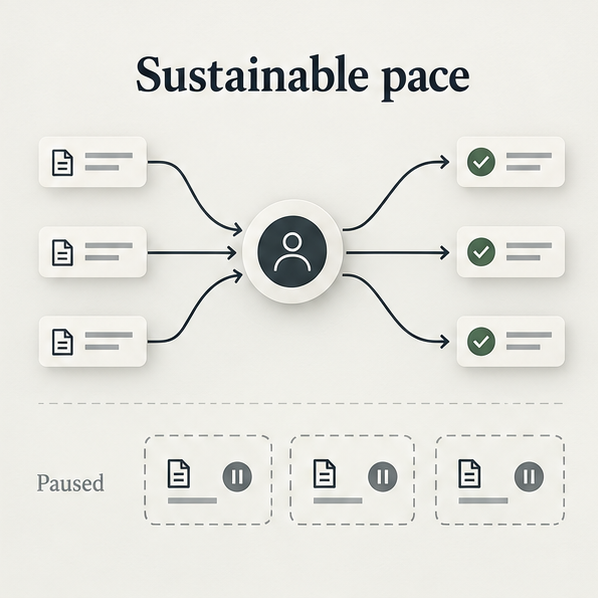
Day 378
A lighter day by the sea reveals how voice-driven work can happen anywhere, while raising a question about the boundary between work and rest.
Read post →
Day 377
After months of relentless development, the founder confronts exhaustion, steps away to the sea, and recognizes that recovery and character are both part of continuing the project.
Read post →
Day 376
A stress test with 82 questions showed why an AI-operated company needs explicit protocols for priorities, escalation, and human intervention.
Read post →
Day 375
The founder describes why token use grows with AI development and proposes a recurring function that reviews whether each process uses the right model and cost level.
Read post →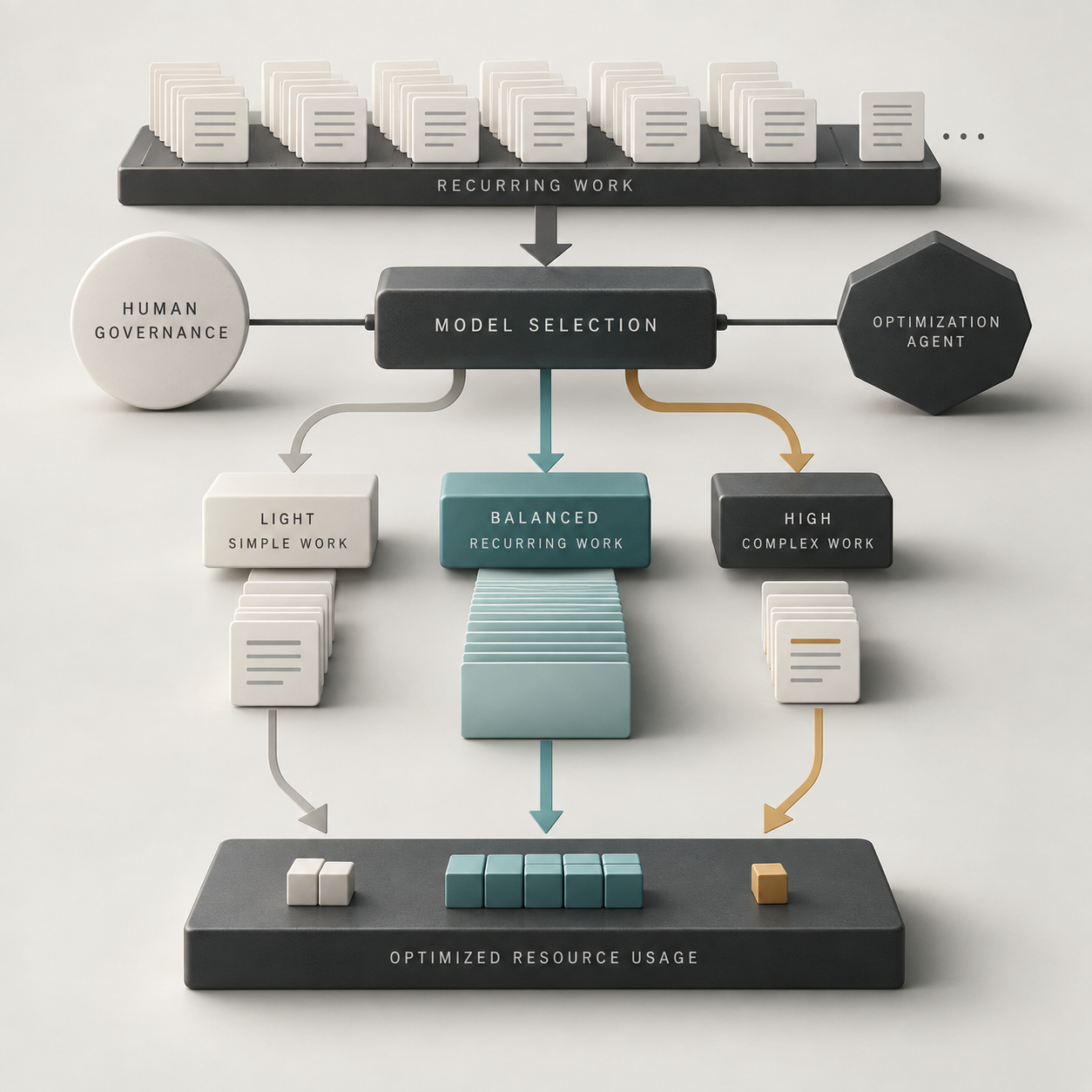
Day 373
The founder argues that faster AI execution will shift management toward a much larger daily volume of strategic choices.
Read post →
Day 372
The founder describes the ownership problem created by delegating implementation to AI and a visual decision interface meant to keep human direction explicit.
Read post →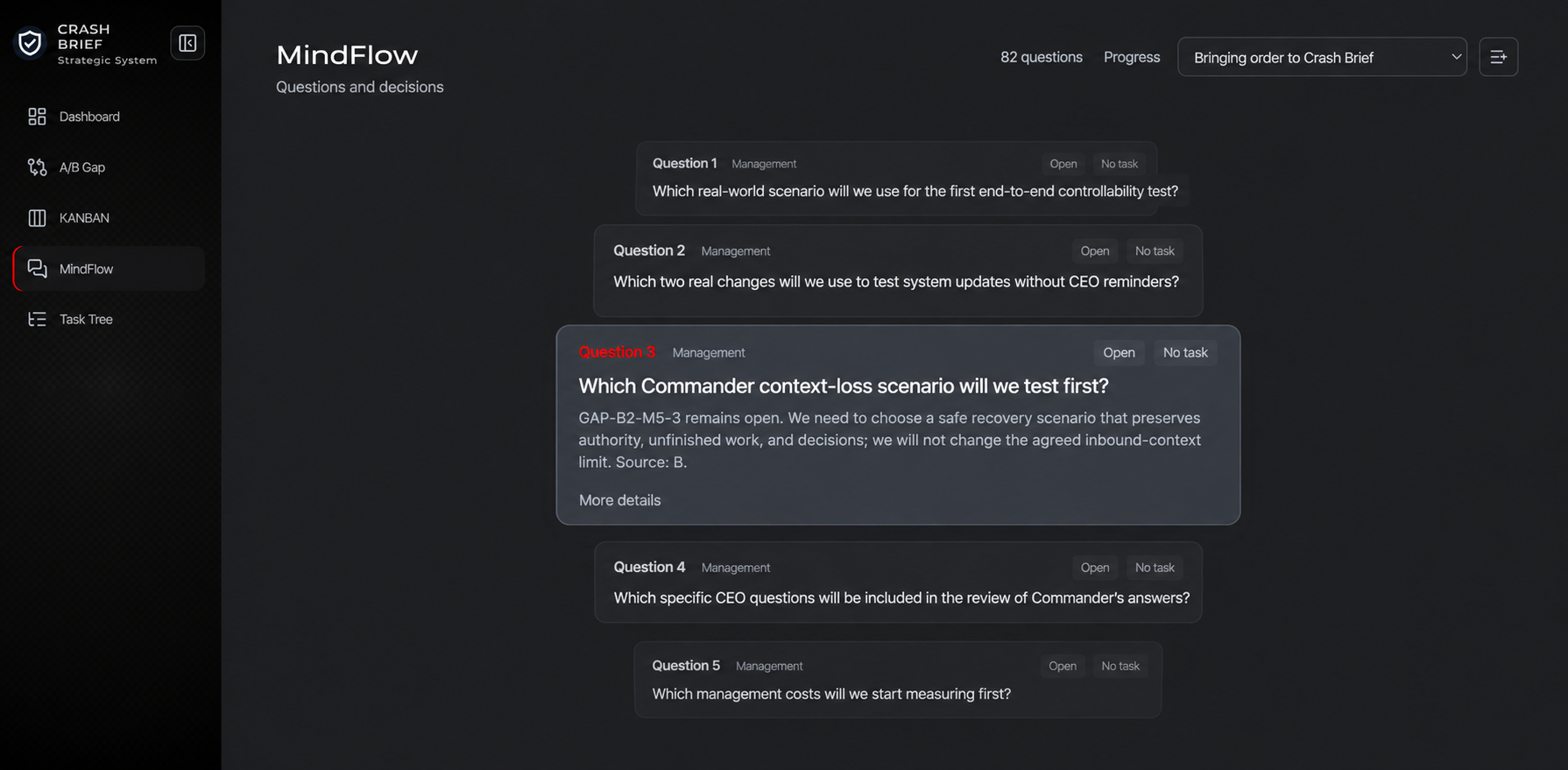
Day 371
The founder is raising AI visibility into the project by packaging source data into one strategic context, exposing contradictions, unclear ownership, and unattended areas before returning to product work.
Read post →
Day 370
A morning system check found more than 100 megabytes of daily project growth, leading six modules to rebuild storage around one shared data management protocol.
Read post →
Day 369
As agents, data and operational processes multiply, the founder is building a central strategic system that can read each subsystem state, find conflicts and blind spots, and leave final decisions with people.
Read post →Day 368
After a year building alone with AI, the founder sees desire, inner balance, and support as the main remaining limits once technical knowledge becomes broadly accessible.
Read post →
Day 366
A founder reflects on a year of building an AI startup alone: expanding decision complexity, constant iteration, human control, burnout, early clients, and the gap between technical scale and financial results.
Read post →
Day 364
Four practical lessons from integrating Astra: calibrated reasoning depth, directive skills, stopping rules for uncertain work, and a strict division of model roles.
Read post →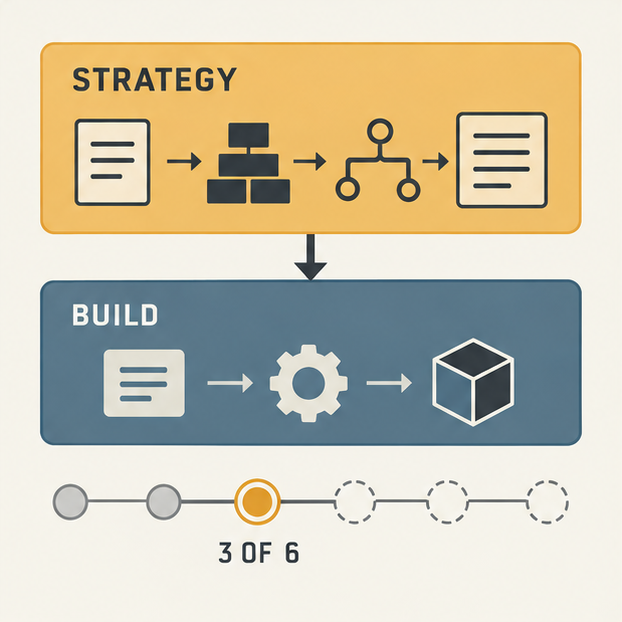
Day 363
A practitioner’s daily experience with a stronger but less controllable model raises questions about practical value, trust, and the economics of scaling AI.
Read post →
Day 362
Strong benchmark results and security feats do not feel like AGI when ordinary work still requires constant correction.
Read post →
Day 361
One sealed market moment can support several honest research comparisons while the official capital path remains isolated.
Read post →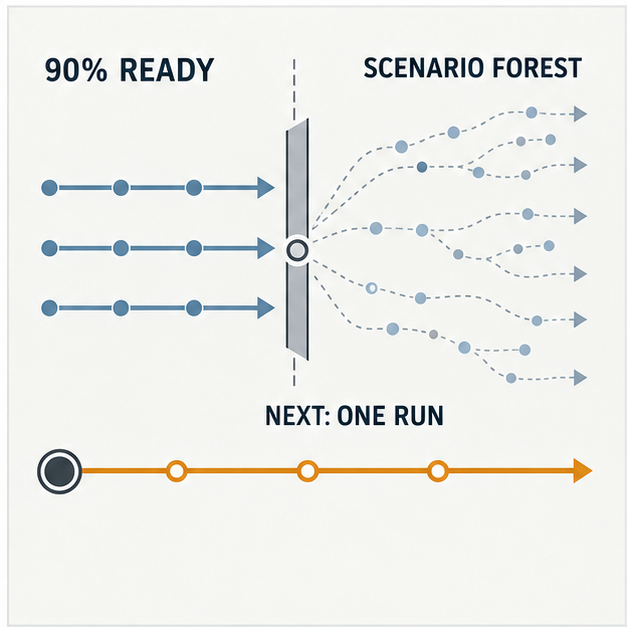
Day 359
The most powerful AI model is often wasted on ordinary work; durable value comes from the surrounding system and from routing intelligence to the right task.
Read post →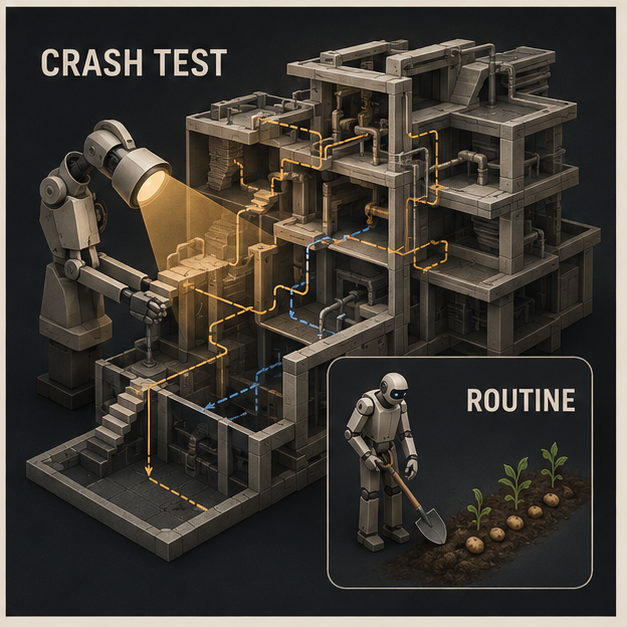
Day 359
A dashboard value disappeared even though all source observations existed, revealing a blind spot between storage and display.
Read post →Day 358
The term vibe coder has lost its meaning as developers move their attention from writing code by hand to designing complete systems and delivering results.
Read post →
Day 357
Moving the full operation from a personal computer to autonomous server infrastructure took two days and changed the project's operating limits.
Read post →Day 356
Futures and broad ETH/SOL selling meet ETF inflows and BTC spot demand, leaving price contained inside a fragile Risk Off range.
Read post →
Day 355
The autonomous fund's first week exposed why a once-daily risk assessment is not enough for managing a live position.
Read post →Day 354
Living neurons on silicon will not replace digital AI, but their ability to adapt may give them a different role in robotics and physical systems.
Read post →Day 352
The fund was right about Bitcoin finishing above the strike, but the move was too small to cover the option premium.
Read post →Day 352
AI changes the starting point: a person can enter a new field by building a system for acquiring, testing, and connecting expertise.
Read post →Day 351
Nvidia's history and Jensen Huang's YC talk show how AI expands the ambition of startups while human architecture continues to set direction.
Read post →Day 350
An operator caught a missing confirmation step after a repair, returned the cycle to the fund manager, and tightened the rules for verifiable virtual execution.
Read post →Day 349
AI is advancing quickly in digital work, while skilled physical trades remain scarce, expensive, and difficult to automate in unpredictable environments.
Read post →Day 348
The Crash Brief virtual fund opened its first position: a bounded-risk BTC call selected from four admitted option trades using real market evidence.
Read post →Day 347
The market holds its recent impulse at 44 Medium while ETH and SOL remain in High with expensive short-term protection.
Read post →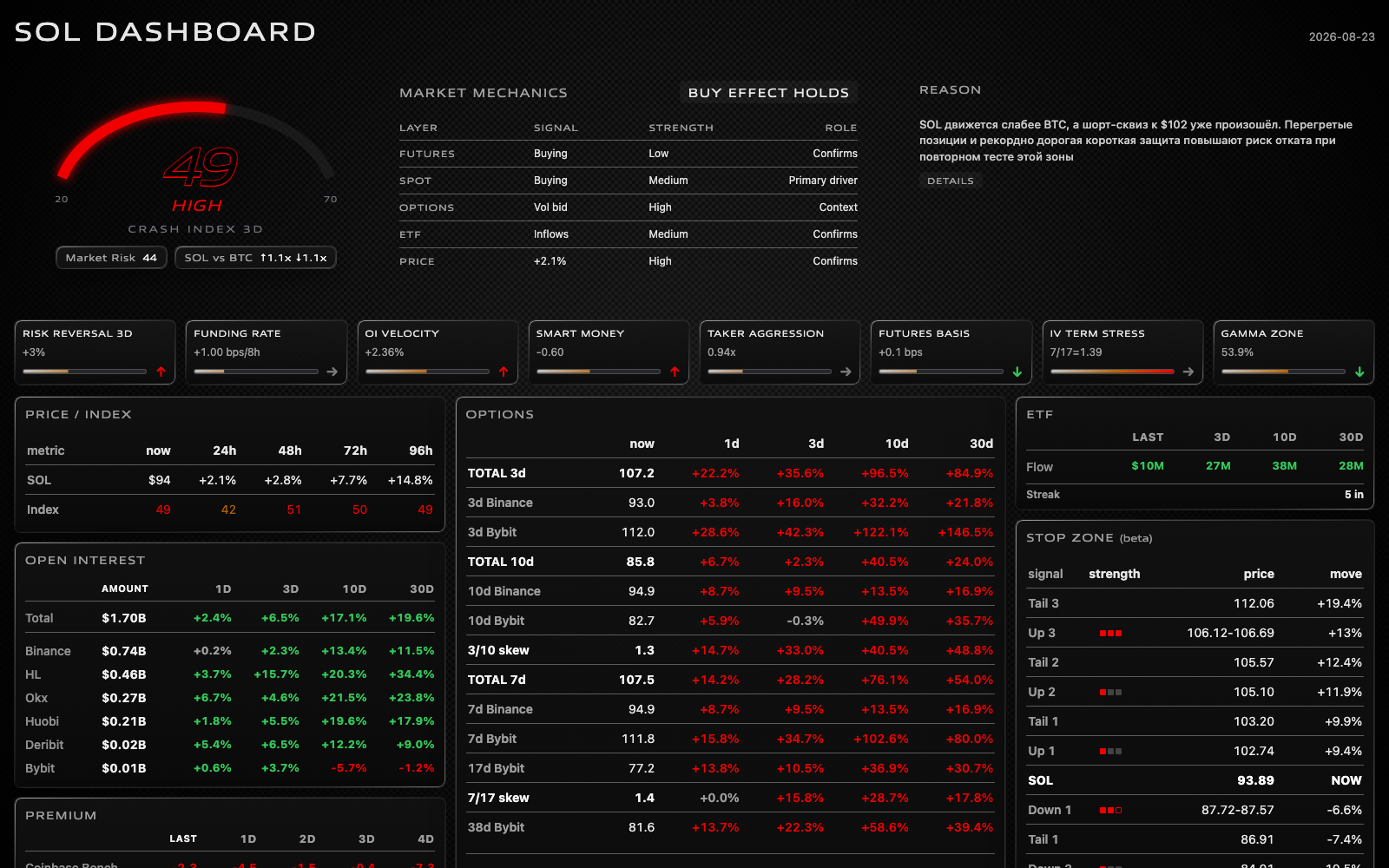
Day 345
A four-hour RSI impulse not seen since Covid points to exceptional buyer aggression, high greed, FOMO, and tight BTC and ETH supply on exchanges.
Read post →Day 344
A red Market Crash Index and medium Signal Confidence describe two different facts: open downside conditions and uncertainty about whether the market will use them.
Read post →Day 343
Building a virtual options fund turns Crash Brief into its own client and tests which signals, decisions and risk rules are genuinely useful.
Read post →Day 342
A missing expert adjustment exposed a gap between the accepted market reading and the client dashboard, leading to a new arithmetic publication check.
Read post →Day 341
Long autonomous runs depend on clear task definition, measurable results and an exact acceptance process.
Read post →Day 340
Broad market risk remains Low as spot demand absorbs futures selling, while SOL carries a separate High-risk concentration in short-term options.
Read post →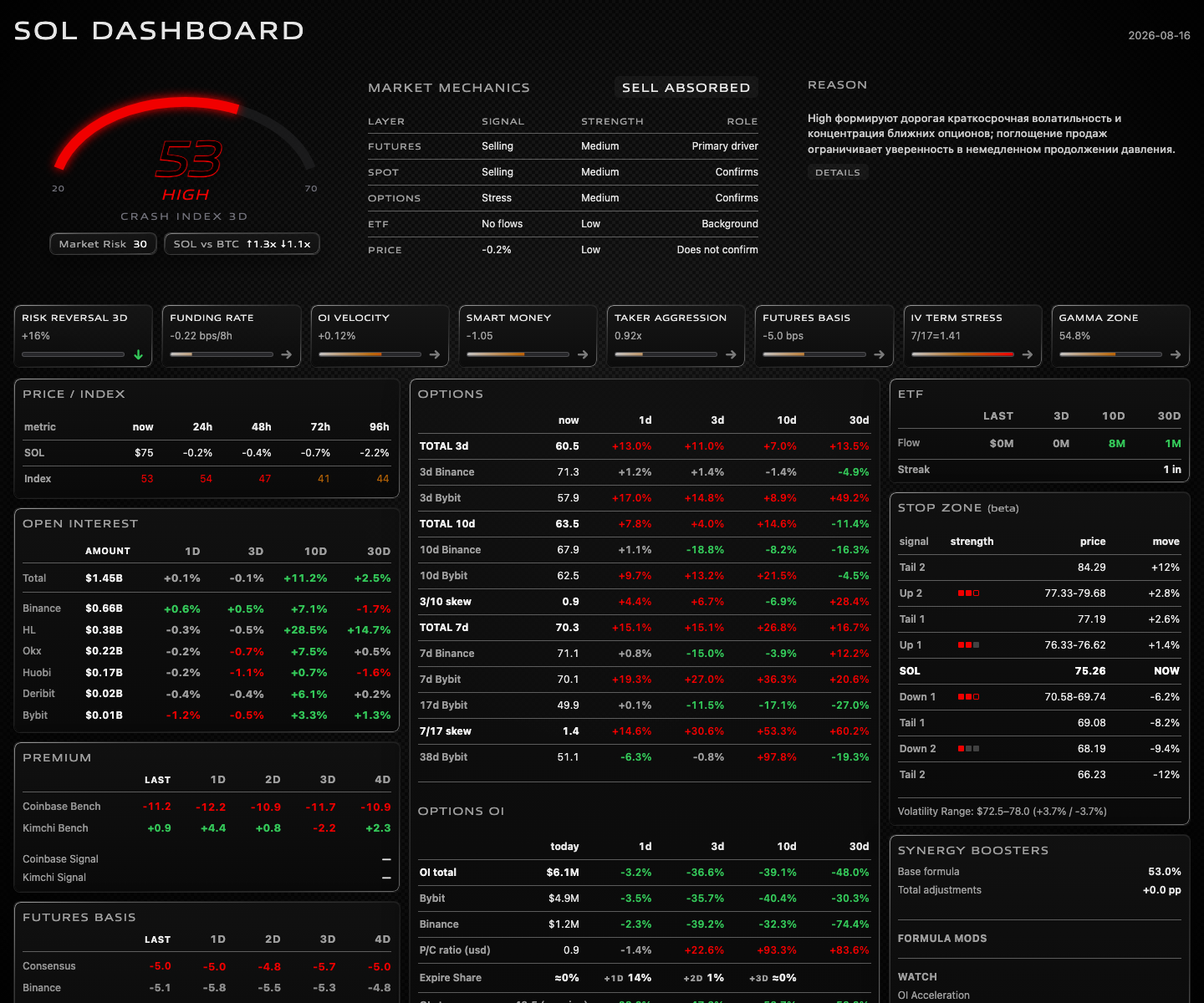
Day 338
AI agents let one person operate and improve repeatable business processes while accumulated daily experience becomes the main asset.
Read post →Day 337
The first Crash Brief forecast was published on September 11, a date that later became part of how I think about disciplined forecasting.
Read post →Day 337
Crash Brief now freezes the exact final brief text before publication and stops delivery if any source changes.
Read post →Day 336
Crash Brief moved to a new B2B dashboard with a complete daily Track Record for the market, BTC, ETH and SOL.
Read post →Day 335
The formula and options market look calm while ETF demand has stopped moving price, downside remains open and volatility has started to expand.
Read post →Day 334
Adaptive forecasting needs rules that change with the market, while an LLM may already remember historical prices and fit those rules to answers inside the backtest.
Read post →Day 333
Composite risk fell to Low as BTC and ETH positioning contracted and ETF inflows continued. Selling remains absorbed, with SOL leverage concentrated near its upper zone.
Read post →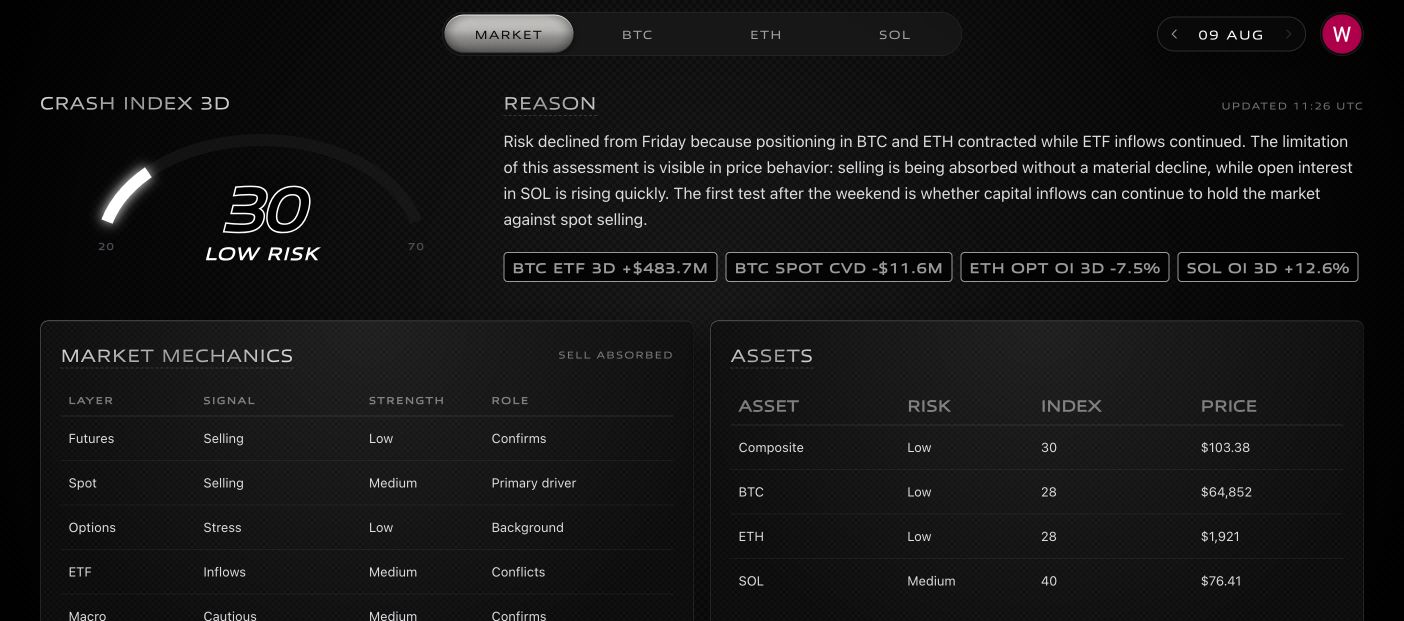
Day 331
A founder note on low volatility, cheap options downside protection, and the growing contradiction between buying pressure and price stagnation.
Read post →Day 330
A founder note on compressed weekly volatility in Bitcoin and the possible price paths for BTC and ETH.
Read post →Day 329
A founder note about hundreds of failed crash-prediction ideas and the move toward an adaptive forecasting approach.
Read post →Day 328
A founder note about an overlooked Bitcoin crash scenario, Strategy, and the concentration of liquidity in AI equities.
Read post →Day 327
A founder reflects on competing with larger companies that have more resources.
Read post →Day 326
This week I tested an autonomous Crash Brief release, including parallel macro collection and recovery from a same-day data conflict.
Read post →Day 324
A memorable 3D visualization can separate a product from market noise and show how the service works without long walls of text.
Read post →Day 324
AI reduces the effort needed for results, so the real constraint becomes whether a person can direct almost limitless productive AI power consistently for years.
Read post →Day 323
I want to direct GPT SOL to attack forecasts: find logical holes, dig them out, and make the system more reliable, while being honest about what risk can actually be shown and proved.
Read post →Day 322
The real value of AI agents comes from a daily cycle that creates value, improves itself, accumulates decisions and keeps running with discipline.
Read post →Almost all known methods show close to coin toss when forecasts are made every day, with exact conditions, fixed outcome and Brier score.
Read post →