Day 376
The 90/10 Problem of AI Management
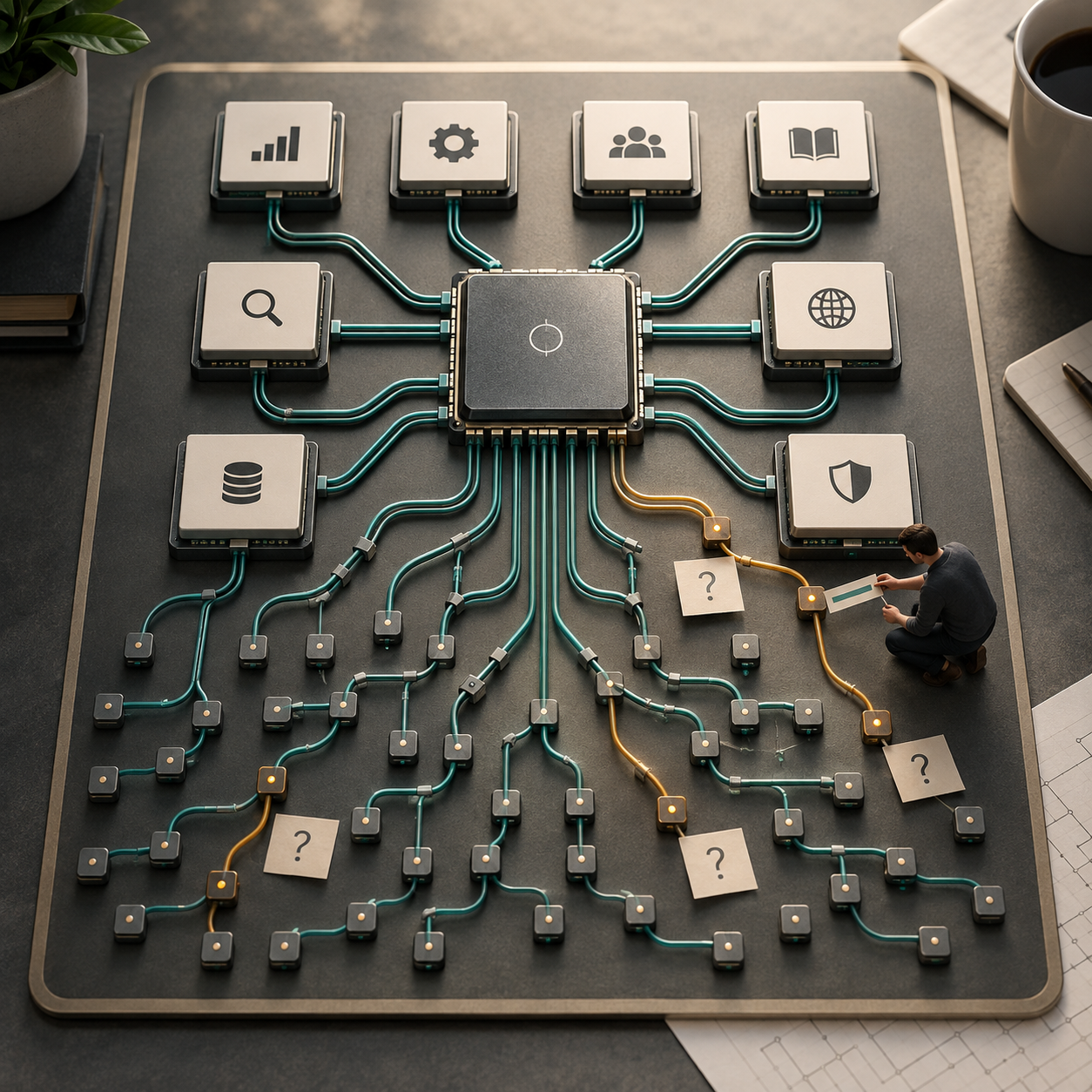
I want to reach a system where AI manages a company in 90% of situations, while a human steps into the remaining 10% when a genuinely strategic decision is needed. I thought I was already close.
Last week I put a strategic system on its feet: 25 agents, 8 separate systems, and one large model that is supposed to see the whole company. Today this system prepared 82 questions for me about unclear decisions, dependencies, and rules.
About 30% of those questions should never have appeared. I had already answered some of them. Some did not matter. The rest appeared because the system can see all the components, but it does not share my priorities.
For me, this became a useful failure.
A strong model can complete a one-time task through search, trying alternatives, and several attempts. A company consists of recurring processes that run every day, create consequences, and tomorrow need to work as predictably as they do today.
Such processes need explicit protocols. What can AI decide independently? What must reach me? Which exception actually matters? In what order should information move? What must the central system know before it starts acting?
I imagine the company as a motherboard. Every process is connected to it by a separate cable, and every cable has its own protocol: what moves through it, what does not, when it happens, and what priority the signal has.
If these rules are vague, AI will still provide an answer. The problem will appear at the first strategic fork: important information will remain hidden, unnecessary questions will reach the founder, and understanding of what is happening will start to disappear.
The hardest part is extracting the owner's own hierarchy of importance. Often I cannot formulate it precisely myself until the system asks the wrong question.
Today's progress required taking a step back. Synchronization between a founder and an AI-operated company takes more time than installing agents. The outcome needs to be defined, the owner needs to be interviewed in detail, the owner's priorities need to become protocols, and only then should autonomy be increased.