Day 375
Optimizing LLM Costs
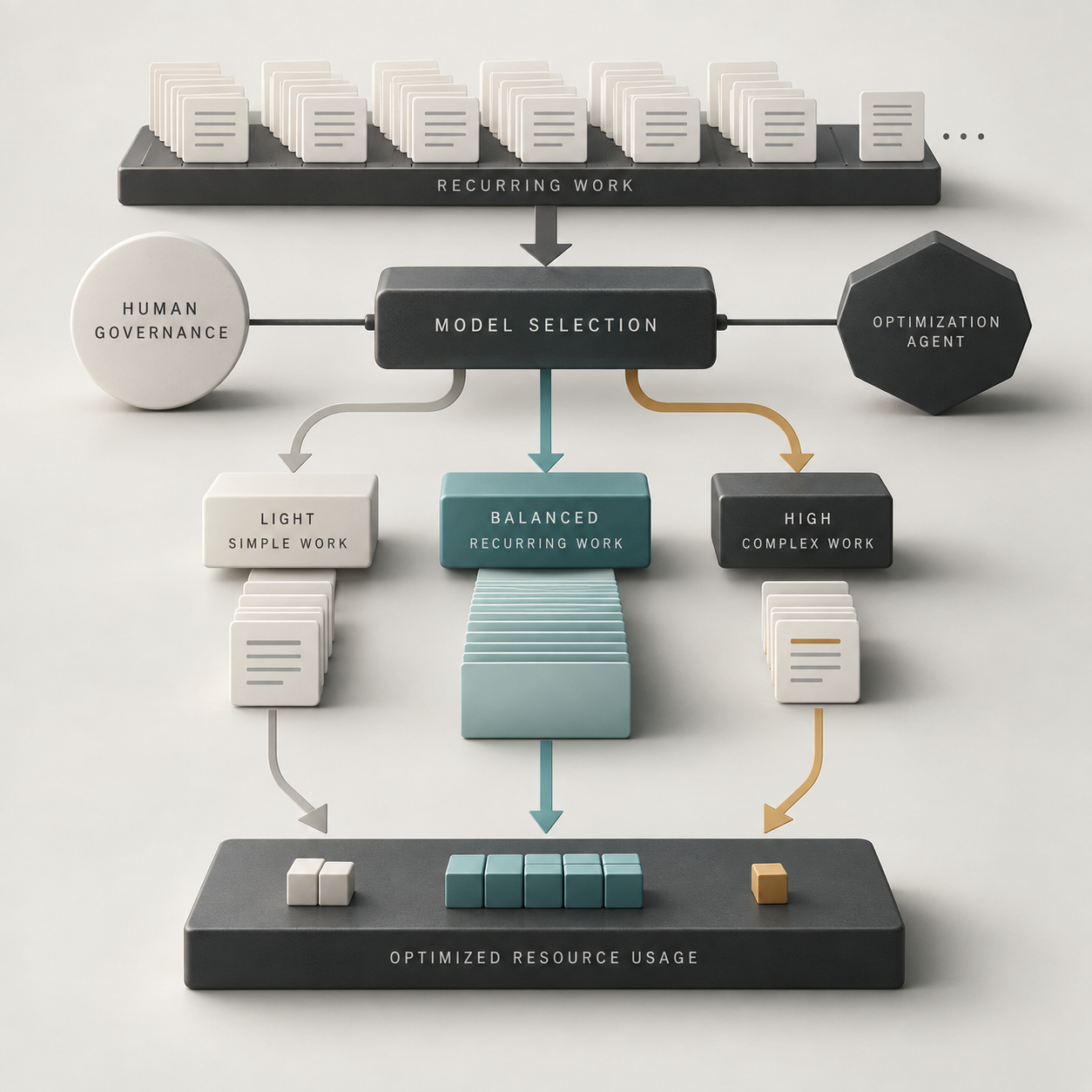
The stronger models become, the more appetite appears for complexity and depth in development. Processes expand, autonomous work increases, limits run out faster, and maintenance becomes more expensive.
In recent days I started rebuilding my project and found many inefficient processes. The main conclusion is that token consumption has a natural tendency to keep growing.
At the same time, most tasks do not need the most expensive models and the maximum reasoning level. They are justified for one-time complex tasks, breakthroughs, and situations where an unusual approach is needed. In ordinary work, the cost of tokens gradually becomes an analogue of payroll. The higher the spending, the worse the economics work and the lower the business margin becomes.
This is why routine commercial processes should regularly be moved to more affordable models. Gemini, Qwen, and DeepSeek already show a good level in the middle segment at a significantly lower cost.
After this review, I managed to almost halve the costs of some processes. I also understood that one such audit is not enough. Models continue to develop: work that only a senior model could do two months ago is already available to a cheaper one today.
In my view, every large AI project should have a separate function for LLM cost optimization.
It can be a dedicated agent that regularly analyzes all digital AI processes in the company and answers three questions:
1. Does the selected model match the complexity of the task?
2. Can the same quality result be obtained more cheaply?
3. Which processes should be rebuilt with the new capabilities of models in mind?
The cost of artificial intelligence needs to be controlled as systematically as infrastructure, personnel, and other operating expenses.